Books in the MCL: Repainting Subway Art. TRIPL a.k.a. FURIOUS
- Book review by Brooklyn Street Art
- Martha Cooper Library
- MCL
- August 13, 2026
TRIPL a.k.a. FURIOUS. Repainting Subway Art. 2024
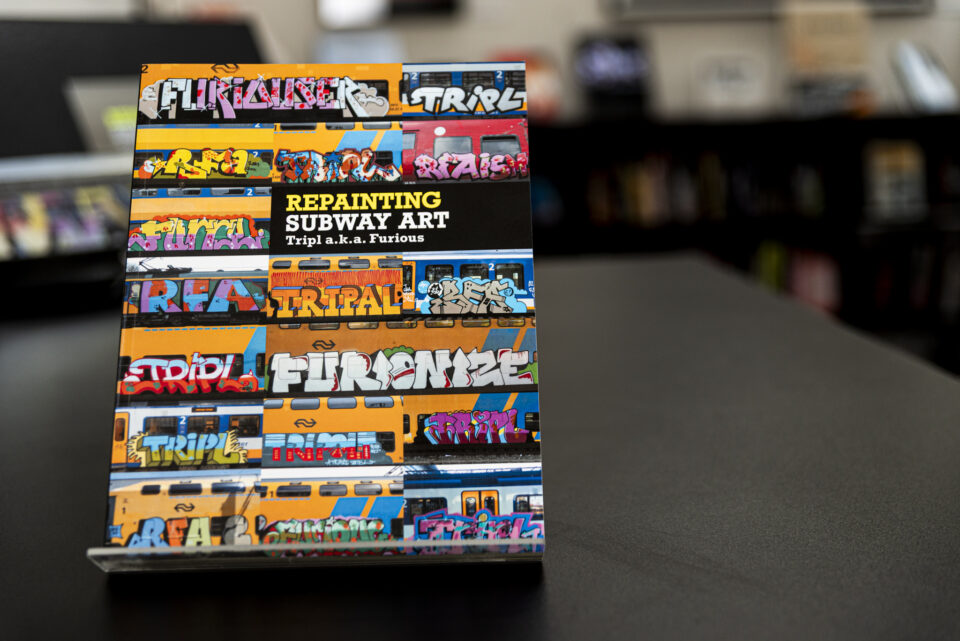
Before opening this book, try to imagine what it would take for one artist to recreate a publication so deeply embedded in graffiti culture that it has been called its Bible. Talent and painting skills are only the beginning. Add discipline, logistics, nerve, physical stamina, photography, styling, train knowledge, and an almost unreasonable willingness to keep going. That is essentially what Dutch graffiti writer TRIPL, a.k.a. FURIOUS, set out to do with Repainting Subway Art: recreate all 239 works pictured in Martha Cooper and Henry Chalfant’s Subway Art, then reconstruct the photographs, situations, and ultimately the book itself. What began as a joke among friends developed into a project that consumed roughly a decade.
Published in 1984, Cooper and Chalfant’s Subway Art became one of graffiti’s defining documents. Its influence traveled far beyond New York, introducing generations of young writers to painted subway trains, letter construction, names, characters, techniques, and an entire culture that many readers had never encountered firsthand. Copies were carried in backpacks, studied until the bindings failed, photocopied, shared, and — according to persistent graffiti lore — sometimes liberated from bookstores and libraries. Dutch author and researcher Daniël de Jongh titled his 2024 Nuart Journal review of TRIPL’s project “A Reincarnation of the Bible of Graffiti in Slow Motion,” which gets close to the peculiar devotion at work here.
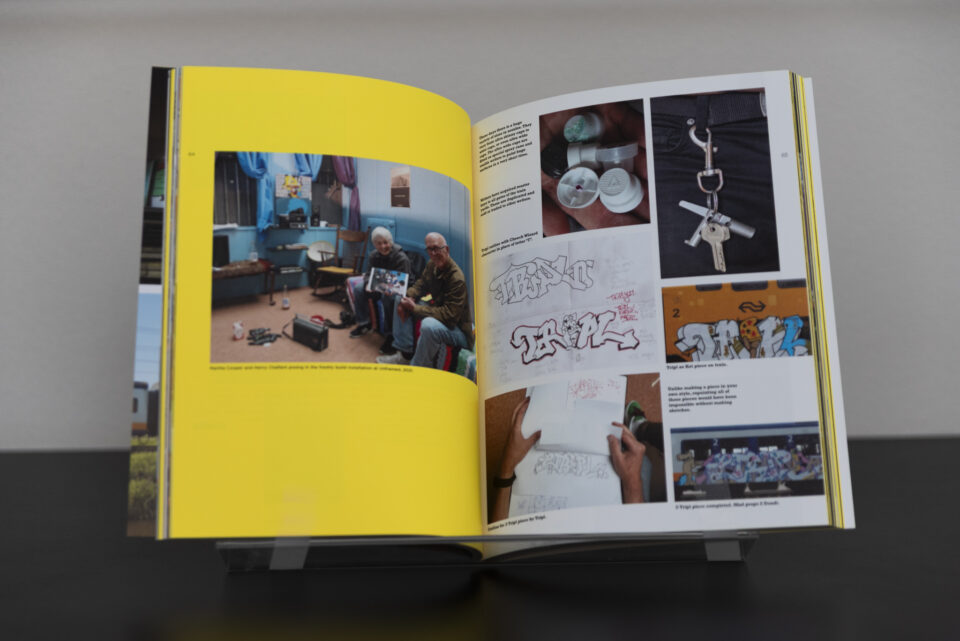
Recreating, however, is not simply copying. TRIPL did not select a few famous pieces and repaint them in his own style. He took on the entire proposition, primarily using Dutch and other European trains while adapting the original compositions to different rolling stock. The original writers’ works became the structure for new versions, with TRIPL working through their proportions, gestures, colors, characters, jokes, and letterforms while introducing his own names and substitutions. Each completed page became another piece in an enormous puzzle.
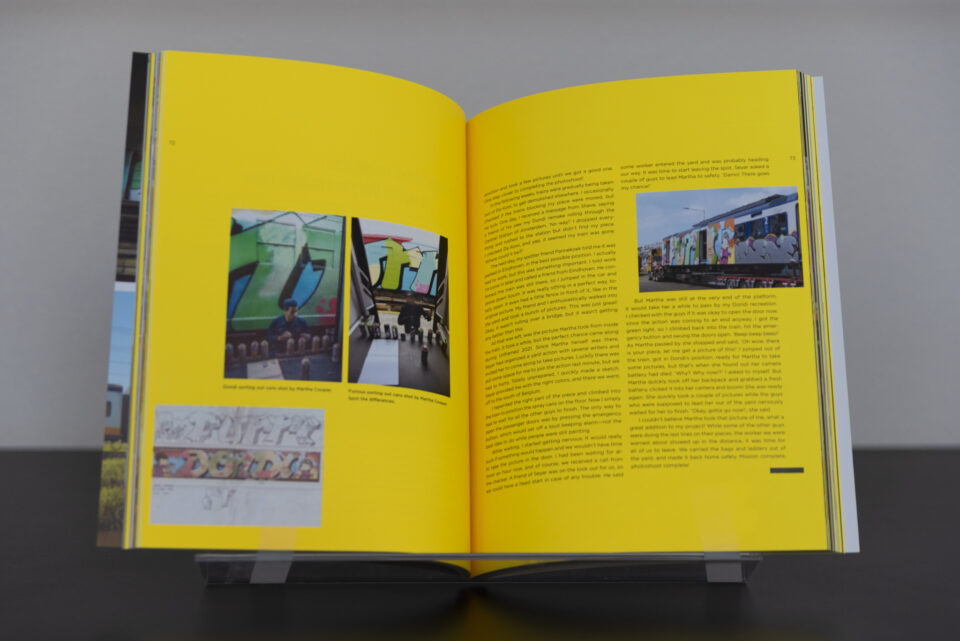
The painting was only part of it. TRIPL also reconstructed the photographic world surrounding the trains: angles, poses, close-ups, portraits, action shots, clothing, passengers, backgrounds, and other details that gave Cooper and Chalfant’s original images their character. He styled and staged scenes, stepped into different roles, found props, and recreated circumstances that had occurred four decades earlier on another continent. One of the most difficult was DONDI’s whole car, for which Cooper had photographed both the painting process and the completed train in motion. TRIPL had to reproduce not only the piece but the circumstances of the photographs themselves.
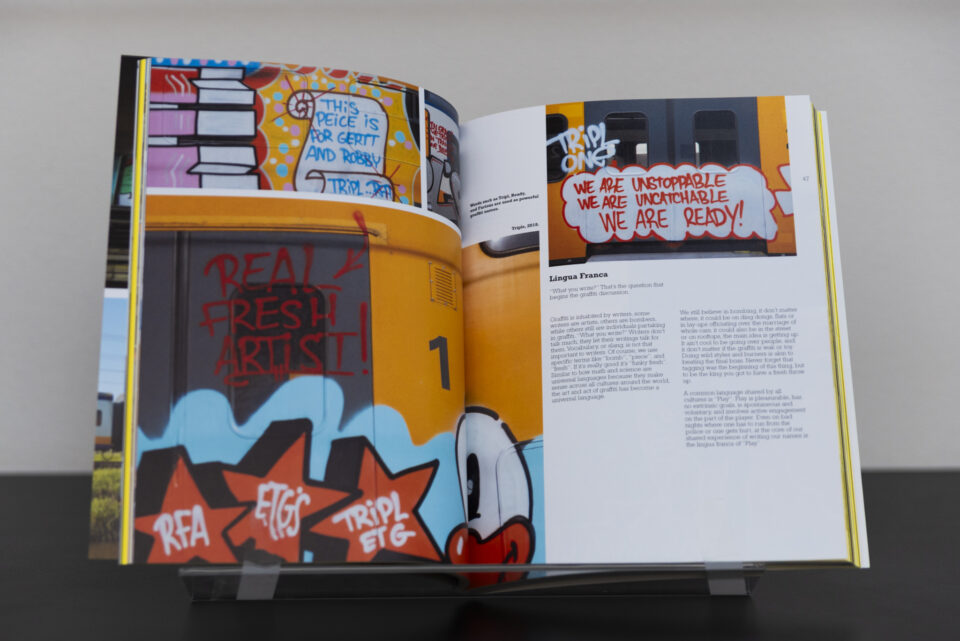
That obsessive attention gives Repainting Subway Art its charm. It is not a sterile facsimile produced at a desk. TRIPL returned to railway environments where timing, security, schedules, access, darkness, and the possibility of losing the work remained part of the equation. The differences between 1984 New York and present-day Europe inevitably leak into the pictures, and he wisely lets some of them become jokes. An anti-Koch message becomes anti-Trump; elsewhere contemporary devices and habits replace their analog predecessors. The original composition remains recognizable while forty years of cultural change slips into the frame.
The book itself extends the impersonation. Published exactly forty years after Subway Art, it borrows the original’s format and visual logic while expanding it considerably. At 196 pages and 371 illustrations, it contains 92 more pages than the original edition, making room for process photographs, additional documentation, essays, and interviews with Cooper and TRIPL. The publisher describes the project as moving from painting through photography and styling, and the extra material is important because it lets the reader backstage to see just how absurdly complicated the undertaking became.
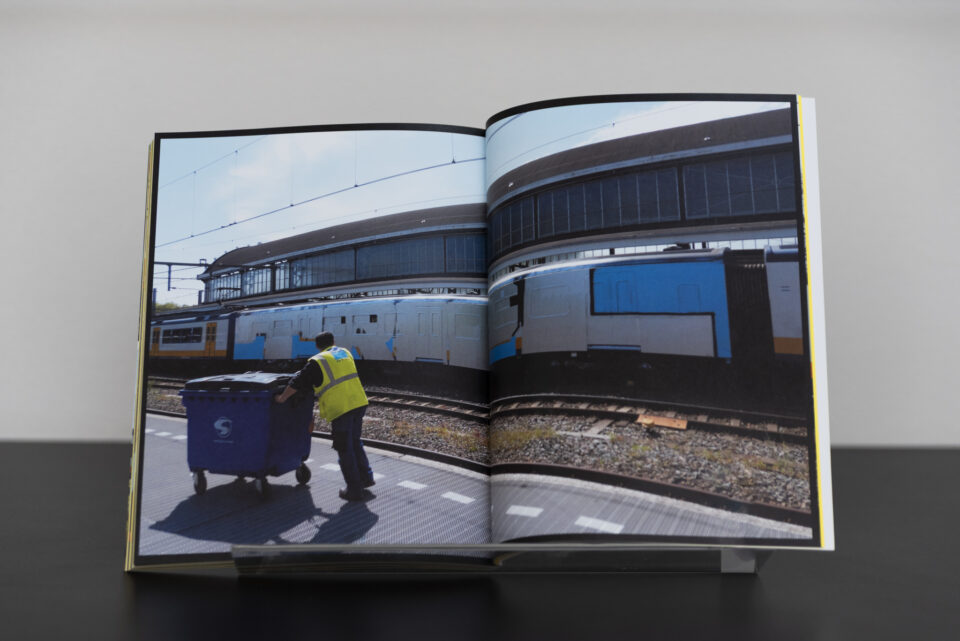
The achievement is impressive enough on the level of endurance, but the book becomes more interesting when considered as a form of historical participation and homage. TRIPL could not return to New York’s subway system of the early 1980s, and he did not belong to that generation. What he could do was subject himself to some of the speed, secrecy, planning, uncertainty, physical effort, and photographic necessity that shaped the original material — then carry the evidence back into print.
Repainting Subway Art is the result of a decade-long refusal to let an improbable idea go. After the trains were buffed and the nights disappeared, the evidence remained: someone actually did this.
Text Steven P. Harrington and Jaime Rojo Fotos Diana Paun