
Books in the MCL: Robbie Conal: Streetwise: 35 Years of Politically Charged Guerrilla Art.G. James Daichendt
- Book review by Brooklyn Street Art
- Martha Cooper Library
- MCL
- September 4, 2026
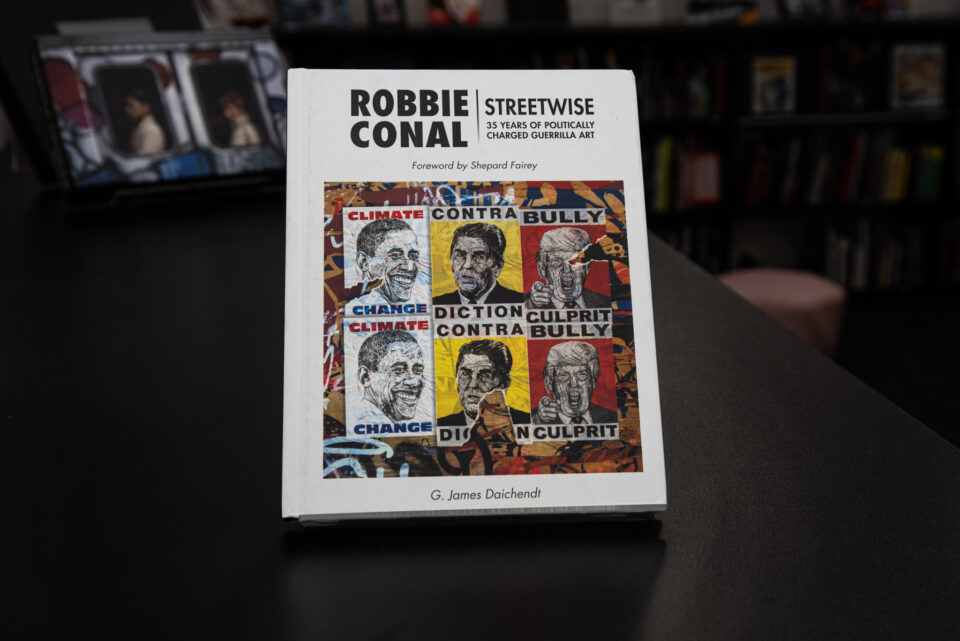
G. James Daichendt. Robbie Conal: Streetwise: 35 Years of Politically Charged Guerrilla Art. 2020
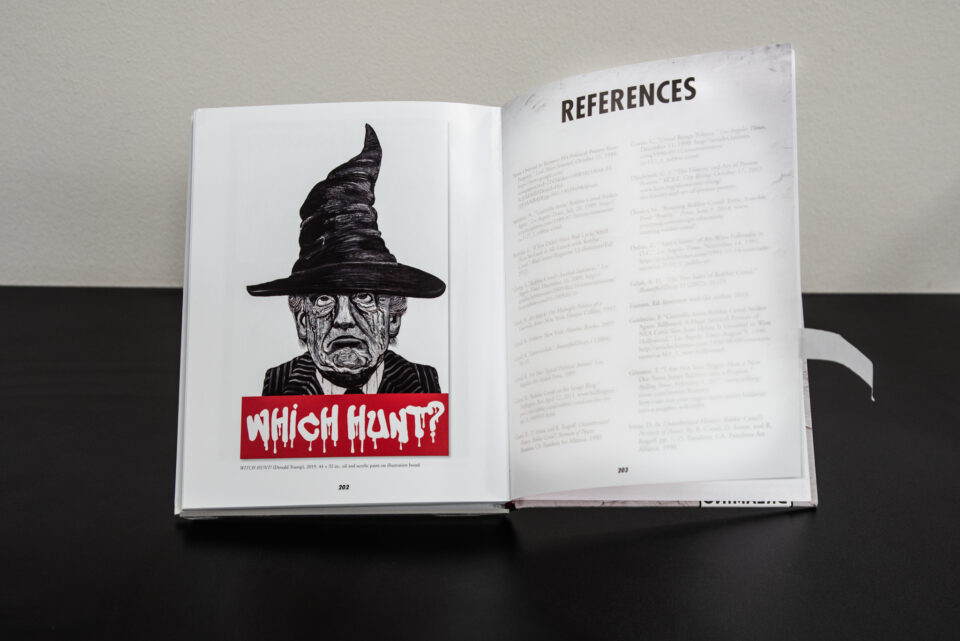
Few forms of public discourse have endured as effectively as political caricature. Political cartoonists can express sentiment and opinion without uttering a syllable, using humor, observational skills, deep knowledge of the subject matter, and skillful craft. The political cartoon, when done well, lands its punch with a blunt efficiency that can influence the direction of a debate. For more than four decades, Robbie Conal has built a reputation by searing some of the most mendacious figures in politics, finance, media, and the celebrity-industrial complex, wheat-pasting his visually scathing posters on the street in the manner of advertisers’ wild-posting campaigns.
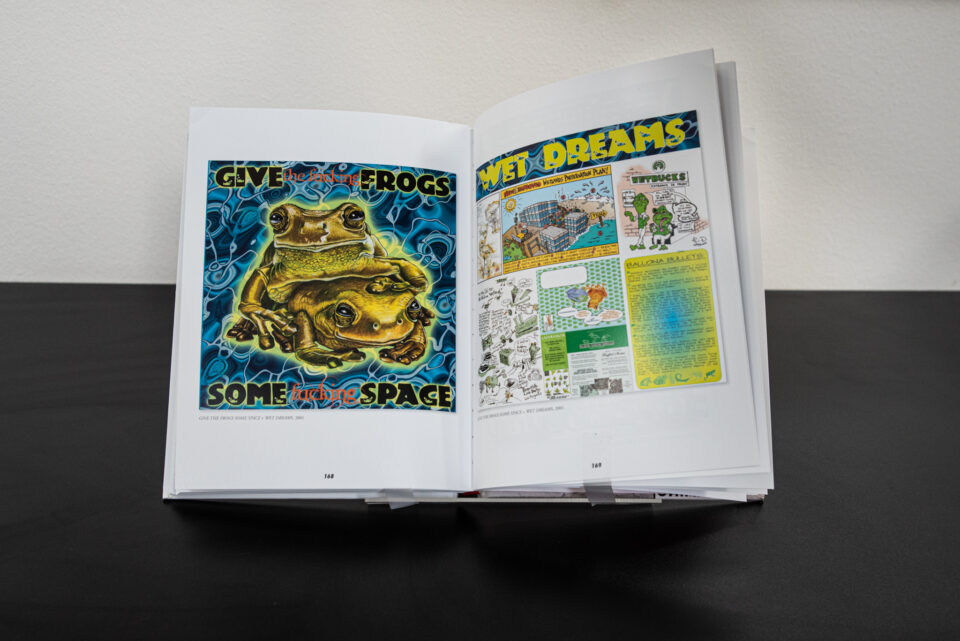
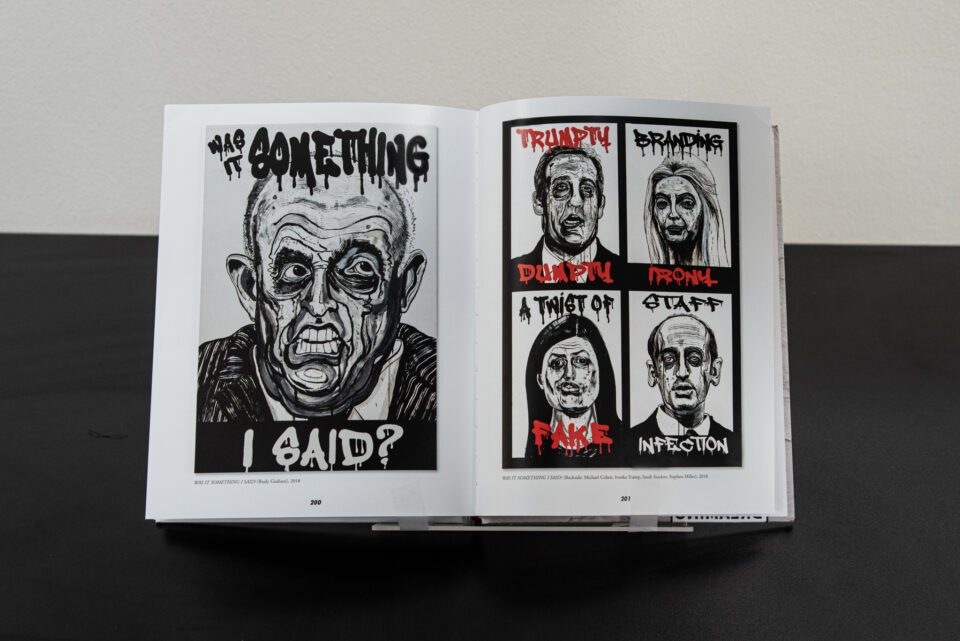
With succinct texts, crisp slogans, and curt nicknames, Conal pulls back the veil of public image-making and exposes what he regards as the less flattering truths beneath. He strips away the carefully maintained façade and drops it onto the street for public inspection. His depictions cannot easily be dismissed as those of a partisan sycophant; his subjects have ranged across a spectrum of personalities from various points on the political and cultural landscape. Posted in multiples like political advertisements, his portraits force the accidental viewer on the street to grapple with the grotesque, look below the surface of a public persona, and confront contradictions, hypocrisies, ambitions, and self-interest that often remain hidden from view. Like an X-ray, the work attempts to reveal what lies beneath the polished exterior rather than what is presented for public consumption.
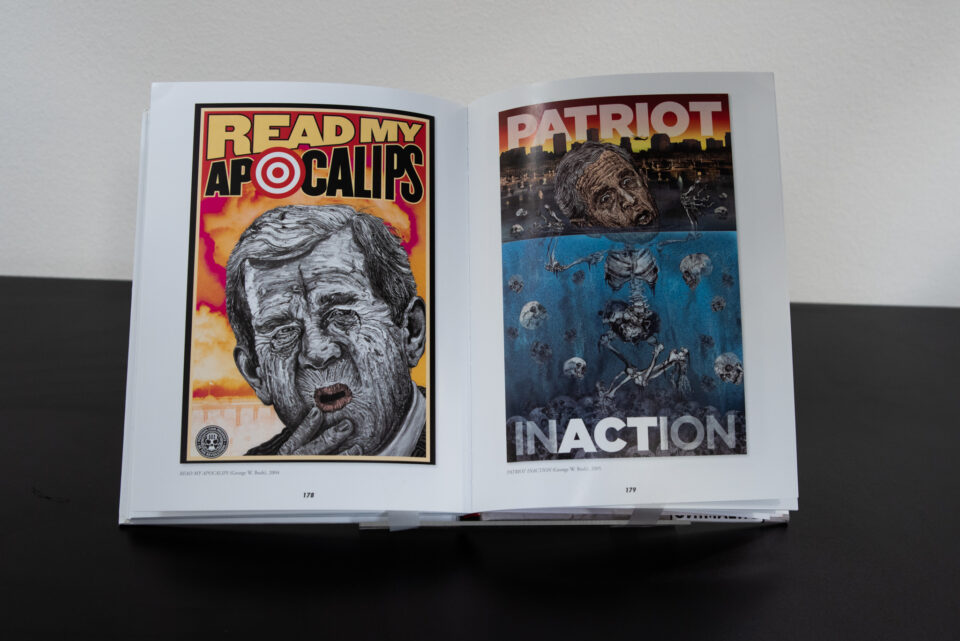
What has consistently distinguished Conal’s practice is his understanding of the street as a communications platform. Long before social media became a primary arena for political commentary, Conal was placing dissent directly into public space. His posters appeared on walls, utility boxes, vacant storefronts, and neighborhood corners, meeting viewers where they already were. Equal parts caricature, editorial commentary, and public intervention, the works use the city itself as a distribution network.
In this book, author G. James Daichendt, EdD, who has previously written about Kenny Scharf and Shepard Fairey and authored The Urban Canvas: Street Art Around the World, examines, documents, and contextualizes Conal’s oeuvre. A street artist himself, among many other pursuits, Daichendt describes Conal as “an LA fixture and someone who is universally respected for the passion and vitality that he has brought to his work as an artist and teacher for several decades.”
Daichendt thoughtfully lays out the many chapters of Conal’s interests and influences, following a practice that has seemingly never been short of political figures and public personalities to take aim at. As an object lesson, Conal’s work remains particularly relevant to the portion of the street art community that uses the street to communicate, advocate, criticize, and rebuke the hypocrisies of culture and politics. Rather than treating public space as merely a backdrop, he has consistently used it as a forum for civic engagement and public debate.
“I vividly remember the first time I saw Robbie Conal’s art because it felt like the exact thing I was meant to see but didn’t realize it until I experienced it,” says Shepard Fairey in his foreword. In his description, one can clearly see the impact Conal’s work had on a younger generation of artists who came to understand the street not simply as a place for self-expression, but as a place for direct communication.
“From that moment of discovering Robbie’s work forward, I had a clearer vision of what art could be… A poster on a corner utility box caught my eye … it was an image of Ronald Reagan on a bright yellow background with bold type that said CONTRA above and DICTION below. Then, a block later, I spotted another one. Now I was on the lookout, and the Contra-Diction posters seemed to be on every corner,” Fairey says. “This Contra-Diction poster spoke to me as a communiqué from a truthful voice of the people.”
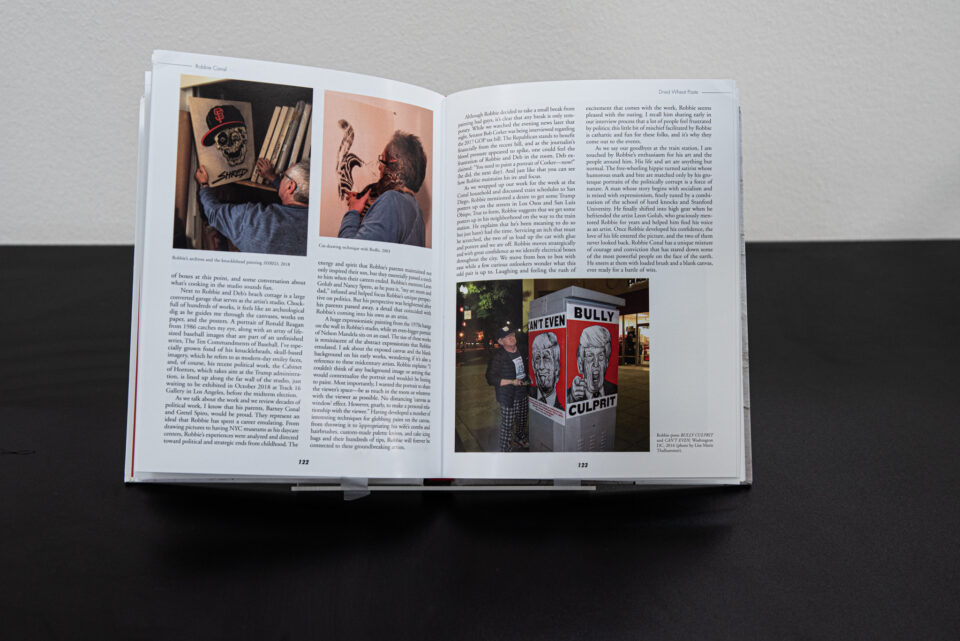
Fairey’s recollection illustrates why Conal’s work continues to resonate. While many artists have brought political themes into public space, Conal developed a visual language that was immediate, confrontational, humorous, and unmistakably his own. Streetwise serves not only as a survey of that career, but also as a reminder of the enduring role public satire can play in civic life. In an era crowded with imagery and opinion, Conal’s posters remain examples of how a simple image, a sharp phrase, and a well-chosen wall can still command attention.
Text Steven P. Harrington and Jaime Rojo Fotos Diana Paun